Friday, May 8, 2009

To explode with great grace--

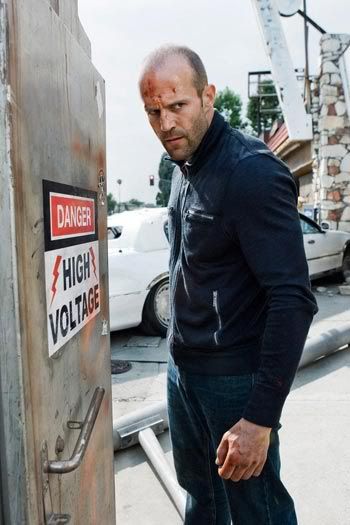
--so, I was thinking about it: there aren't any explosions in the Crank films. In the second one, there are a few electric bursts that send him flying, but I'm talking about your classic Die Hard action movie explosions. You know... like, gas combustion or however we can classify it. Fiery plumes.


This is particularly strange given the films' why-not-include-the-kitchen-sink? approach. BUT--is it really as strange as all that? These movies are not about combustion. They are about the body's capacity to resist explosions. Bursts of energy provided by electricity, drugs, hormones, fear, or even (as is the case with the first one, much less the second) love, are all channeled through a biological vehicle and translate into a wild, but (here's what's important) controlled, trajectory. But the risk of Chelios's heart, or body in general, actually bursting itself is never introduced. Hence, no ka-booms.

______________
This post is an installment in a continuing series of content coordinated by theme or motif with posts from Enoch Allred of Chiltingham, John Allred of clol Town, Jon Fairbanks of Funkadelic Freestylings of Another Sort, Eli Z. McCormick and Miriam Allred of Modern Revelation!, John D. Moore of Whatnot Studios, Davey Morrison, Joseph Schlegel of Sour Mayonnaise, Sven Patrick Svensson of Sadness? Euphoria?, and William C. Stewart of Chide, Chode, Chidden. This week's theme: Explosion'.

Wednesday, April 29, 2009

Being: with Statham


I've been thinking a lot about the Crank films lately. Mostly I've been thinking a lot about the worldview of the sequel, a brazen, difficult film. Seemingly entropic, much more than the violently one-tracked trajectory of the first film, High Voltage escalates Chev Chelios's esxistential plight by graduating his fuel from the personal (adrenaline) to the inter-personal (electricity). This model was likely not developed by writer/directors Neveldine/Taylor to consciously inspect the human condition--I'm not sure that consciousness has much to do with it at all. The Crank films explore existence as pure physical form.

The Crank films are indirectly about the ways in which we choose to live amongst each other, physically. Latent racism, deviant sex, homophobia, the ghettos-to-Beverley-Hills, the breadth of Crank's vision of the civic practices, not theories, of a multi-cultural Metropolis is inspiring. To suggest that the filmmakers themselves are racist seems an absurdity, although that depends on how realistic one's definition of "racist" is. When I see Crank, I am seeing not just a depiction of the tensions of the kaleidoscopic American citizenry in action, but also a production that incorporates and invigorates and defines this tapestry. Frequently in troubling terms (Bai Ling is very difficult to get used to--just in general, but especially in High Voltage), but those terms can be empowering. That is a defense to mount elsewhere (and you can probably count on more Crank-centric posts in the near future), but I think it wouldn't be a stretch to say, whether you love the films or not, whether they offend you or not, that they embody a unique degree of cultural symbiosis that allows for the exploration of active symbiotic dynamics within its hectic vision of the world.

______________
This post is an installment in a continuing series of content coordinated by theme or motif with posts from Enoch Allred of Chiltingham, John Allred of clol Town, Jon Fairbanks of Funkadelic Freestylings of Another Sort, Eli Z. McCormick and Miriam Allred of Modern Revelation!, John D. Moore of Whatnot Studios, Davey Morrison, Joseph Schlegel of Sour Mayonnaise, Sven Patrick Svensson of Sadness? Euphoria?, and William C. Stewart of Chide, Chode, Chidden. This week's theme: Symbiosis'.

Friday, March 13, 2009

A poverty of...

...wealth: "I am poor."
...spirit: "I feel sad."
...health: "I have diabetes."
...good will: "I am foreclosing your house, Mrs. Parker."
...stuff: "I have nothing."
...knowledge: "I don't know."
...energy: "Whatever."
...technology: "Rub these sticks together, Ug."
...aptitude: "I can't make this chord sound right."
...love: "Leave my sight."
...sight: "Blackness surrounds me."
...bravery: "Ah!"
...grace: "Sorry, no can do."
...God: "Pass the pork."
...youth: "My back is hurting these days."
...friends: "..."

I love you guys.

______________
This post is an installment in a continuing series of content coordinated by theme or motif with posts from Enoch Allred of Chiltingham, John Allred of clol Town, Jon Fairbanks of Funkadelic Freestylings of Another Sort, Eli Z. McCormick and Miriam Allred of Modern Revelation!, John D. Moore of Whatnot Studios, Joseph Schlegel of Sour Mayonnaise, Sven Patrick Svensson of Sadness? Euphoria?, William C. Stewart of Chide, Chode, Chidden, and WiL Whitlark of The Real McJesus. This week's theme: 'Poverty'.

Thursday, February 19, 2009

Because I Can...

I apologize to those few who read/stumble across this page hoping for/expecting interesting/useful/insightful information. Fact is, hoo-boy, I'm experiencing a greater interest in the dealings of exo-digi-centric stimulus (if such a term may be coined, likely to be stuffed in the pocket of a dingy pair of jeans, only to fall out and roll under a bookcase, never to be seen again until the bookcase is relocated). In other words, the computer here has been cramping my style lately. One might even say, were one the type to invert strange platitudes into stranger halfway-relevant sentiments, that I've been unable to see the trees for the forest. Sue if you like, though I really don't think you have a strong case against me.

[imagine a diverting picture here, in place of this statement, possibly involving a kitten or some such creature, in a pose of such cuteness!]

______________
This post is an installment in a continuing series of content coordinated by theme or motif with posts from Enoch Allred of Chiltingham, John Allred of clol Town, Jon Fairbanks of Funkadelic Freestylings of Another Sort, Eli Z. McCormick and Miriam Allred of Modern Revelation!, John D. Moore of Whatnot Studios, Joseph Schlegel of Sour Mayonnaise, Sven Patrick Svensson of Sadness? Euphoria?, William C. Stewart of Chide, Chode, Chidden, and WiL Whitlark of The Real McJesus. This week's theme: 'Forest'.

Thursday, February 12, 2009

Our nation has sanctioned the beginning of the end...


______________
This post is an installment in a continuing series of content coordinated by theme or motif with posts from Enoch Allred of Chiltingham, John Allred of clol Town, Jon Fairbanks of Funkadelic Freestylings of Another Sort, Eli Z. McCormick and Miriam Allred of Modern Revelation!, John D. Moore of Whatnot Studios, Joseph Schlegel of Sour Mayonnaise, Sven Patrick Svensson of Sadness? Euphoria?, William C. Stewart of Chide, Chode, Chidden, and WiL Whitlark of The Real McJesus. This week's theme: 'Superstition'.

Thursday, February 5, 2009

A Brief Note on the Changing Appearance of Michael Jackson

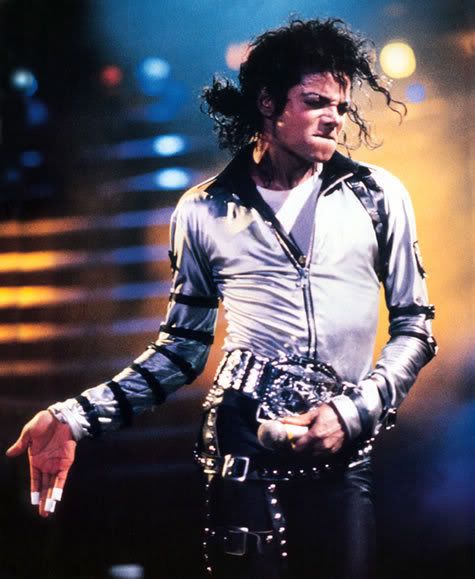
Those who know me either already know about or should have no trouble understanding my attraction to the music, dance, videos, and presence of Michael Jackson. Frankly, I'm always taken aback, rather violently, when I hear people disparage Jackson's person. If the comments were slanted towards his work, my tolerance for criticism would be tempered with good reason. Unfortunately, and this is something I'm sure that everybody experiences, if not participating in, people cannot talk about Jackson (in any capacity, really) without someone offering barbs about his legal and cosmetic history. This could be a testament to Jackson's talent as a musician and video artist (I understand that he's not the directorial force behind his short film/music videos, but there's no reason at all to suspect that he's not a primary creative force behind them... but more on that at a later time). People have been so focused with his looks and molestation gossip (and it is just that: gossip) and thankfully, very, very little of that has migrated into responses to his art. In other words, his work is solid enough to transcend the reputation of his admitted strangeness as a celebrity.

But my intentions here are to briefly focus on his marked physical transformation, that phenomenon that unjustly rides under the marked misnomer in our pop consciousness as his "disfigurements." These days, the focus tends to remark on the changes to his facial structure, things brought about by corrective (nose job after breathing difficulty), cosmetic (cleft in chin), and logistical (hitting high notes) surgeries. Of these, derisive commentary oozes an air of misinformation and a strategic temporal recalibration of the ideal of celebrity worship. As far as I can tell, it is the extent to which Jackson's appearance has changed, coupled with his ubiquitous presence within popular culture, that is the impetus for this overt response. Here I concede that Jackson's dysmorphia is a troubling affair that must not be ignored, but I contest that this fascination should quit at the slightest interference of our impressions of his role as an artist and entertainer. There are those that find him hideous (I am not one... at one point, I was grotesquely fascinated but after doing quite a bit of research into Jackson for a few weeks, I find his current appearance quite striking, if a bit divorced from his earlier beauty... the worst I will go is "ghostly"), but it has become safe to acknowledge this aversion to his physical appearance as a legitimate item of pop criticism.

This is what rubs me the wrong way: since when was it okay to knock someone for their psychological problems, particularly when no soul (save his own) is being harmed by it? I admit that it is more than likely the case that what has given Jackson his dysmorphia and his predilection for the company of children are probably inseparably intertwined, but I have to repeat two things: 1) Jackson absolutely cannot be construed to have had any illegal interactions with children and 2) this has nothing to do with Jackson's work as a musician. But far too many people cite it in a tone of validation for such hearsay-hearsay and shallow, irresponsible criticism.

Secondly, there is his dissolve--from black to white. One word: vitiligo. There is no record of Jackson transplanting or bleaching his skin amounting to this effect. However, there are innumerable cases of 1) vitiligo lightening the skin of young black people 2) harmful instances of vitiligo that are exacerbated by sunlight 3) black people whose skin, because they are reticent to sunlight, gradually lightens to the point of near whiteness and 4) ignorant people who don't bother to get their facts in order before perpetuating falsities about celebrities. It is true that, again, the effects of the vitiligo (and the subsequent treatments, ie, staying out of lights, masking his dark skin to match the lighter shades, feeling ugly) are probably significantly intertwined with the rest of what ails him (and me, by the extension of obnoxious people). However, the artistic benefits of this dissolve are extraordinary, resulting in one of the finest song/videos of the 90's, "Black or White," an great tune made perfect by Jackson's physical demonstration of his ideals.

My point is this: the man is disfigured in a purely ideological way. His discontentment is digging him deeper and deeper into his dysmorphic hole, and his need for acceptance is growing farther and farther from possibility thanks in part to those not as interested in pop culture or Jackson's work as myself. I'm not on a mission to promote an artist, but rather I feel an obligation to crack the skulls of schadenfreude-ridden suckers out there who somehow think it's doing their culture any good by dissing a dude of nearly inarguably immaculate talent (though with little talent for PR, I'll give them that) with unsubstantiated rumors and a practically willful disengagement from the reality of the situation. Come on, people. From ABC to Invincible, do you really want him to stop, having been given enough? If you say yes, you don't know what's best for you.


______________
This post is an installment in a continuing series of content coordinated by theme or motif with posts from Enoch Allred of Chiltingham, John Allred of clol Town, Jon Fairbanks of Funkadelic Freestylings of Another Sort, Eli Z. McCormick and Miriam Allred of Modern Revelation!, John D. Moore of Whatnot Studios, Joseph Schlegel of Sour Mayonnaise, Sven Patrick Svensson of Sadness? Euphoria?, and William C. Stewart of Chide, Chode, Chidden. This week's theme: 'Disfigurement'.

Thursday, January 29, 2009

A Sketch for a Puppet Show

Notes: The location and time period of the main action is the western front during WWI. However, this is an alternate history, or rather, a hidden history, so the design is expressive, the characterization of political attitudes and personalities should eschew the typical realism that accompanies war stories. Basically, anything that would require extensive research should be excised. The show’s opening locations, backstage at a Vaudeville theatre and a top-secret war room, should be treated similarly. Also, it appears that I have contempt for the proper written format of a performance piece. Because I don't care. ____________________________________________________

Plot: G is a ventriloquist. He is American. Vaudevillian. The play opens with the end of a performance, as seen from backstage.

G: [sets up joke]
Dummy: [says something mean]

Audience laughter, Dummy berates audience. Curtain falls. G walks backstage with Dummy, stating gentle, amusing things to his dummy in a way that indicates his awareness of the Dummy’s inanimateness. Think pre-Blue Fairy Gepetto, I suppose, talking to his puppet. He puts his Dummy in a case, closes it, and sits on the case, releasing a weary sigh.

Enter Revue Manager, Mr. White.

W: You still got it, man. You were killing them out there, etc. Say, say I couldn’t pay you tonite.
G: What?
W: Yeah, see, the receipts are even worse than last night. We don’t have a draw, a real gimmick. They’re flocking to Grapeswine’s on 47th. He’s got a trio of Chinese jugglers that sing patriotic dedications as they toss flaming daggers across the stage. They say he smuggled ‘em over here in the same briefcase. Look, pops, I’ll have your money for you by the beginning of next week.
G: Mr. White, can I at least stay…
W: Sure, sure, stay in your changing room if you want. Look, I don’t mean to do this. But not even I can eat on this scratch. [exit]
G: [sigh] Well, that’s that. At least I’ve got a place to rest. An empty stomach, but I’ve got a warm place to stay the night.
W: [popping back in] Oh, and hey… we had to move the heat stove in your room to Camilla Cluck’s room. She’s on the town tonite and her eggs need incubation. Bundle up. [exits]

G sighs and pushes his trunk off the stage to his room. Exits. Once the stage is clear, two government-military-lookin’ dudes enter.

GMLD 1: So, that’s the guy.
GMLD 2: Yeah yeah, my wife goes to see him all the time. She’s crazy about him.
GMLD 1: Well, let’s go see if he wants in.

Exit government-military-lookin’ dudes.

Thus begins the saga of G, a ventriloquist recruited for the American cause during WWI. What the government wants with a voice-thrower (desperate for cash but old enough to know what’s what) will be entirely up to me, the playwright. When I’m done with this, it will be excellent.
______________
This post is an installment in a continuing series of content coordinated by theme or motif with posts from Enoch Allred of Chiltingham, John Allred of clol Town, Jon Fairbanks of Funkadelic Freestylings of Another Sort, Eli Z. McCormick of Modern Revelation!, John D. Moore of Whatnot Studios, Joseph Schlegel of Sour Mayonnaise, Sven Patrick Svensson of Sadness? Euphoria?, and William C. Stewart of Chide, Chode, Chidden. This week's theme: 'Ventriloquism'.